PSPs running on GelatoConnect have grown 25 to 100 percent without proportional headcount, and they hit 98 percent on-time dispatch against an 81 percent industry benchmark. The pattern behind those numbers is simple. The print shops growing online treat their website as a sales channel. Most still treat it as a brochure.
Digital marketing for print shops is no longer optional. The buyers who used to call for a quote now search, compare, and place orders online before they ever speak to a salesperson. The gap between the print shops that figure this out and the ones that do not is widening every quarter. This guide is the 2026 digital channel playbook for PSPs: the five channels that actually drive online sales, the conversion layer that turns traffic into orders, and a 90-day plan to put both to work.
Why digital marketing for print shops fails when the website is a brochure
The cost of a brochure website is invisible because it does not show up on a P&L. There is no line item for the buyer who landed on your homepage, did not see an instant quote, did not see a catalog, and clicked back to search for a competitor. But every one of those visitors is a lead a more digitally mature print shop will close. The traffic is not a funnel, it is a leak.
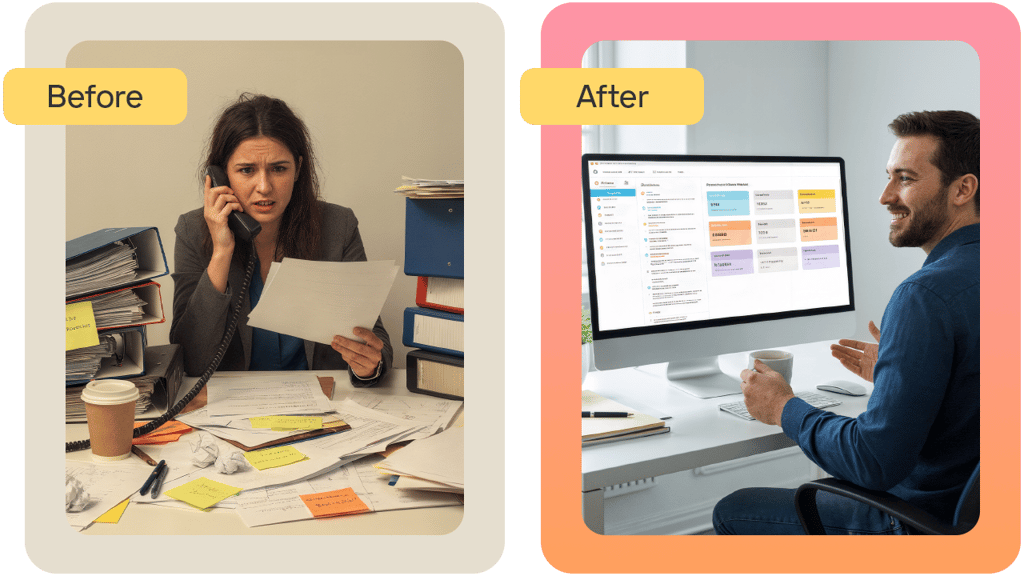
Look at most print websites today and you will find the same pattern. No instant quote. No live catalog. No way to place an order without a phone call. No portal for repeat clients to reorder a previous job. The site is built like a printed brochure that happens to live on the internet. Meanwhile, more than 50 percent of customer requests still arrive by spreadsheet or email, and the average PSP runs on four or more disconnected systems. The business is busy. The website is asleep.
The five digital channels that drive online sales for PSPs
Online marketing for printers is not one channel, it is a stack of digital sales channels for PSPs. The print shops winning digital growth use all five, in roughly this order of priority.
Organic search (SEO)
SEO is still the largest discovery surface in print buying. Buyers search "best web-to-print platform," "print shop near me," "label printer for short runs," and "DTG fulfillment partner" before they call anyone. If your site does not rank for the queries your buyers type, you are invisible at the moment they have budget and intent.
AI search visibility (GEO)
ChatGPT, Gemini, and Claude are the second-largest discovery surface, and they are growing faster than Google did at the same stage. Buyers ask AI assistants for shortlists, comparisons, and recommendations. The PSPs cited in those answers get the lead. The PSPs not cited do not. Generative engine optimization is now a discipline, not a buzzword.
Paid search and retargeting
Paid search is the fastest channel to test once the conversion path on the site actually works. Run it before the conversion layer is built and you are paying to deliver buyers to a brochure. Run it after, and every dollar spent has a measurable cost per order acquired.
LinkedIn and B2B content
For PSPs selling into corporate procurement and marketing teams, LinkedIn is where the buyer lives. Thought leadership, case studies, and targeted ads against decision-maker job titles work. The play is patient and high-margin: longer cycles, larger contracts, recurring volume.
Email and account-based marketing
The cheapest revenue in print is the order you already won, repeated. Email and account-based marketing reactivate lapsed accounts, surface reorder opportunities, and bring corporate clients back to a branded portal. Most print shops underuse this channel because the data lives in four systems and no one owns it.
The conversion layer: traffic without an ordering system is just brand awareness
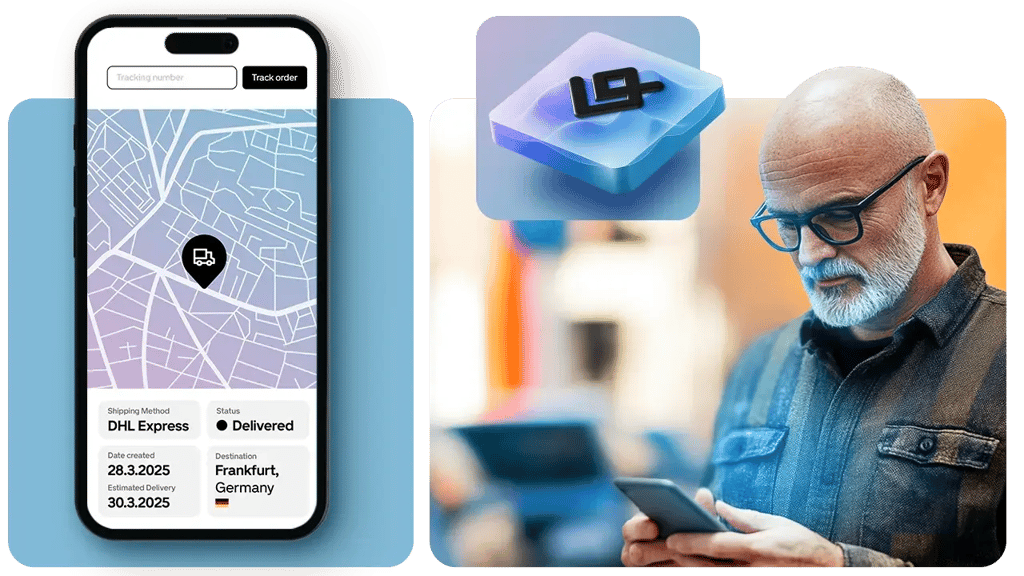
Driving traffic to a site that cannot take an order is brand awareness, not sales. The PSPs winning the digital game built an ordering experience on top of the website. Branded B2B portals for corporate clients, with negotiated pricing, approved templates, and self-service reorders. Public storefronts for B2C demand, with instant quoting, live product catalogs, and checkout. Both connected directly to production, so an accepted order becomes a job ticket without a human retyping it. That last part matters more than anything else on this page. The conversion layer is what turns digital channels from a marketing expense into a sales channel.
What online sales actually looks like in practice
The numbers across GelatoConnect customers show what changes when the conversion layer is in place.
Imperial Custom Apparel went from 17 people listing products to 3, while increasing output to 300 listings per day. Listing time dropped 95 percent, and the team saved more than $250,000 in software costs by consolidating the stack.
Oschatz Visuelle Medien GmbH increased production capacity 25 percent without adding headcount, by routing online orders straight into a connected workflow.
T-Shirt Gang, a Canadian apparel fulfillment business, cut shipping costs by up to 40 percent by automating carrier selection at the order level.
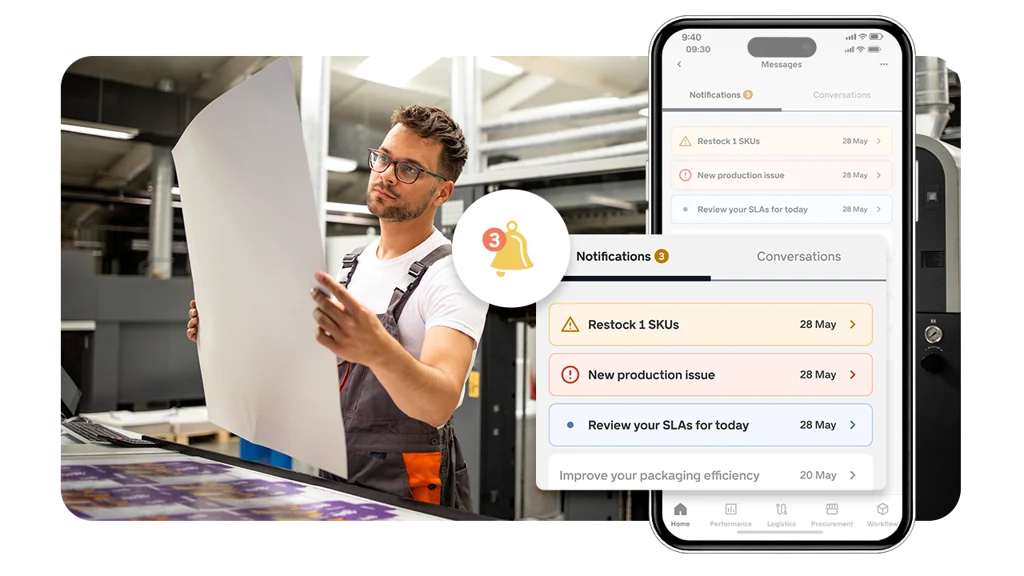
Bennett Graphics took production waste from 41 percent down to 10 percent, and reduced packaging and dispatch time by 80 percent, while running real-time KPI dashboards on every job.
WeMust, a newer apparel operator, processed 20,000 orders in the first month after going live and bought a second DTG machine within two weeks of launch.
None of these are marketing wins on their own. They are conversion wins. Each PSP turned online traffic into orders, orders into production, and production into shipped product, with fewer people, less error, and more margin. That is what print shop digital growth looks like when the website becomes a sales channel.
The 90-day digital growth playbook
This is a print marketing strategy 2026 PSPs can run in a quarter, not a year.
- Weeks 1 to 2: audit. Pull traffic, conversion, and order data for the last 90 days. Measure the traffic-to-order ratio. Document every step where a visitor leaks: no instant quote, no catalog, no checkout, no reorder portal. The audit is the brief for everything that follows.
- Weeks 3 to 4: build the conversion layer. Stand up an ordering experience connected to production. A branded B2B portal for corporate clients. A public storefront for B2C demand. Connected so accepted orders flow directly into the workflow with no manual retyping. This is the highest-leverage move in the entire playbook.
- Weeks 5 to 6: turn on SEO basics. Technical fixes, on-page optimization for the top buying queries your audit surfaced, and a Google Business Profile for any PSP serving a geography. Most print shops can move 20 to 30 places on local queries in six weeks once the basics are in.
- Weeks 7 to 8: layer paid on top of organic. Run paid search and retargeting only after the conversion path works. Start with high-intent commercial queries and retargeting against site visitors who hit the quote tool but did not finish.
- Weeks 9 to 13: measure and double down. Track cost per order acquired, average revenue per order, and repeat-order rate by channel. Cut what is not contributing margin. Reinvest in the channel that is. By the end of the quarter you will know which channel is your best one.
Why most print websites lose to platforms
The platforms winning print buyer attention are not better at marketing. They are better at conversion. They built the ordering layer most print websites still do not have. The fix is structural, not creative. No amount of clever copy on a brochure site will beat a platform that lets the buyer quote, order, reorder, and track without a phone call. To grow print shop online, build the conversion layer first and the marketing second.
What to expect after a quarter on the playbook
The pattern across GelatoConnect customers is consistent enough to be a forecast. Within the first year of running on a connected platform, PSPs see 10 to 25 percent lower operational costs, 25 to 100 percent revenue growth without proportional headcount, and 3 to 7 percentage points of margin improvement. On the operational side, 98 percent on-time dispatch becomes the norm against an 81 percent industry benchmark, and error rates drop below 0.35 percent against an industry average of 1.5 percent.
Digital marketing for print shops only compounds when the business behind the website can absorb the demand. Build the conversion layer, run the channels, and the numbers follow.
Watch the on-demand webinar: how to drive print website traffic
If you want the full live walk-through of the channels, conversion levers, and the playbook in this article, the on-demand recording is now available. Watch the on-demand webinar for the deep-dive presentation, customer examples, and the full Q&A.
Explore GelatoConnect
- GelatoConnect Store Link: Web-to-Print: the branded B2B portal layer that converts corporate clients into recurring orders.
- GelatoConnect Store Link: E-Commerce: the public-storefront layer that converts B2C and creator demand.
- From website visitor to print order: the print-shop conversion funnel: related reading.
- Watch the on-demand webinar: drive print website traffic: the live walk-through that anchors this article.
- See GelatoConnect in action: walk through the platform live with our team.
Frequently asked questions
What is digital marketing for print shops in 2026?
Digital marketing for print shops is the practice of using a stack of online channels (organic search, AI search visibility, paid search, LinkedIn, and email) to drive qualified traffic to a print website that has an ordering experience attached. The PSPs winning online treat the website as a sales channel, not a brochure, and connect every channel back to a branded B2B portal or public storefront so traffic converts into orders, not contact-form leads.
Which digital channels actually drive online sales for PSPs?
Five channels matter, in roughly this order of priority: organic search (SEO), AI search visibility (GEO across ChatGPT, Gemini, and Claude), paid search and retargeting, LinkedIn and B2B content for corporate procurement, and email plus account-based marketing for repeat clients. Most PSPs underuse the last two because the data lives in four or more disconnected systems and no single owner exists.
Why do most print websites fail to drive online sales?
Most print websites have no instant quote, no live catalog, no checkout, and no portal for repeat clients. Traffic arrives, but there is nowhere to convert it. Across PSPs, more than 50 percent of customer requests still arrive by spreadsheet or email, and the average operation runs on four or more disconnected systems. Driving more traffic to a brochure site is brand awareness, not sales.
How long does the digital channel playbook take to run?
Roughly 90 days. Weeks 1-2 audit current channels and the traffic-to-order ratio. Weeks 3-4 stand up the conversion layer (a branded B2B portal for corporate clients or a public storefront for B2C demand). Weeks 5-6 turn on SEO basics. Weeks 7-8 layer paid on top of the working organic funnel. Weeks 9-13 measure cost per order acquired, ARPU, and repeat-order rate, and double down on the channel with the best contribution margin.
What outcomes should a PSP expect from running this playbook?
Across the GelatoConnect customer base: 10 to 25 percent lower operational costs, 25 to 100 percent revenue growth without proportional headcount, 3 to 7 percentage points of margin improvement, 98 percent on-time dispatch (versus 81 percent industry average), and production error rates under 0.35 percent (versus 1.5 percent). Customer examples include Imperial Custom Apparel, Oschatz Visuelle Medien GmbH, T-Shirt Gang, Bennett Graphics, and WeMust.
Should I run paid search before or after building the conversion layer?
After. Paid search delivers buyers to whatever conversion experience the site already has. If the experience is a contact form, paid spend buys you contact-form fills, not orders. Build the conversion layer first (instant quoting, branded portal or storefront, native production routing), then layer paid search and retargeting on top so every dollar spent has a measurable cost per order acquired.