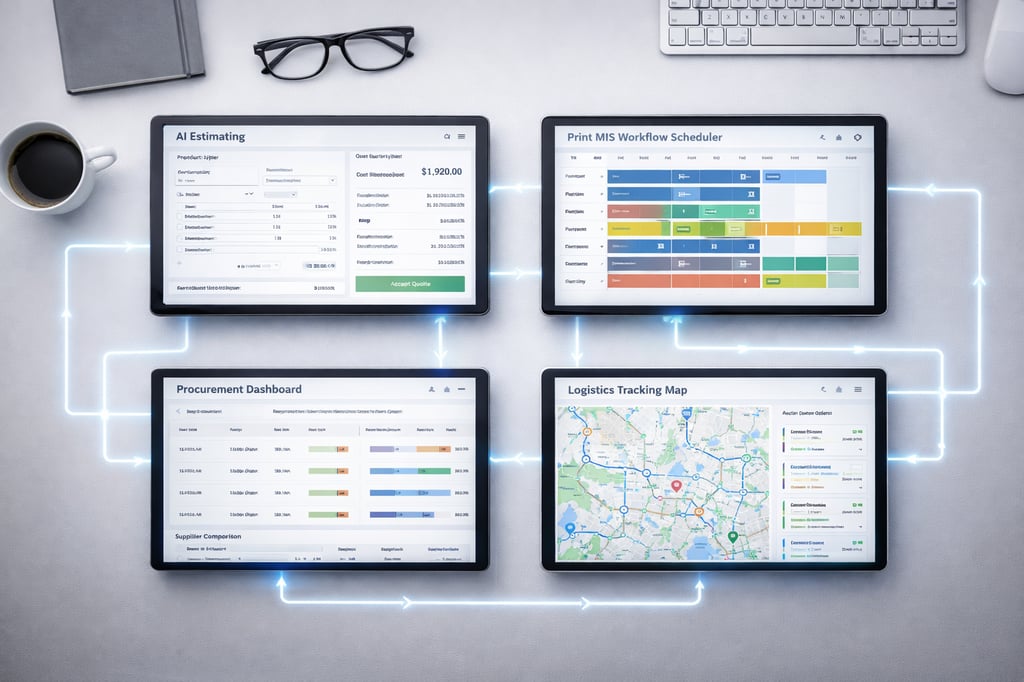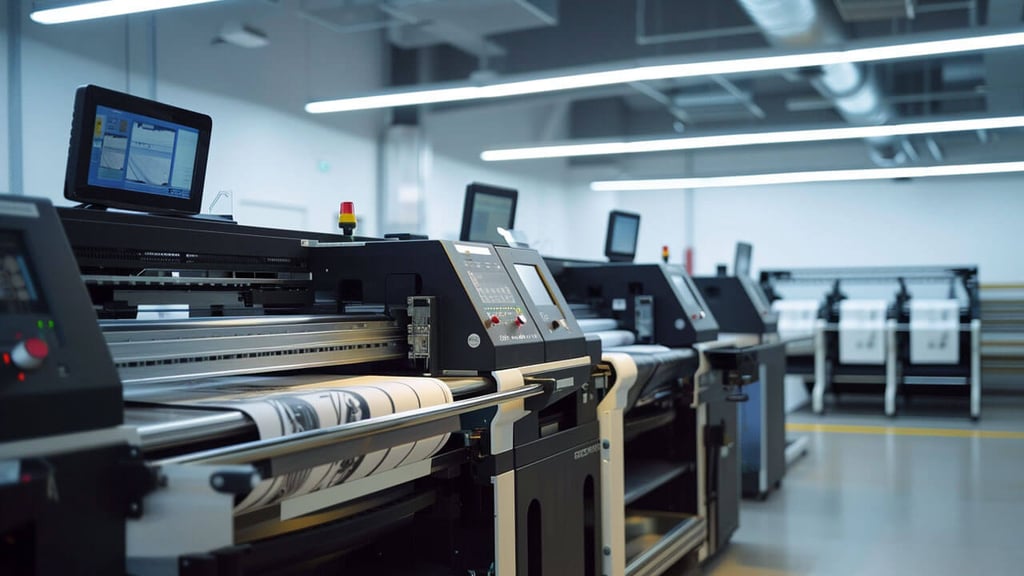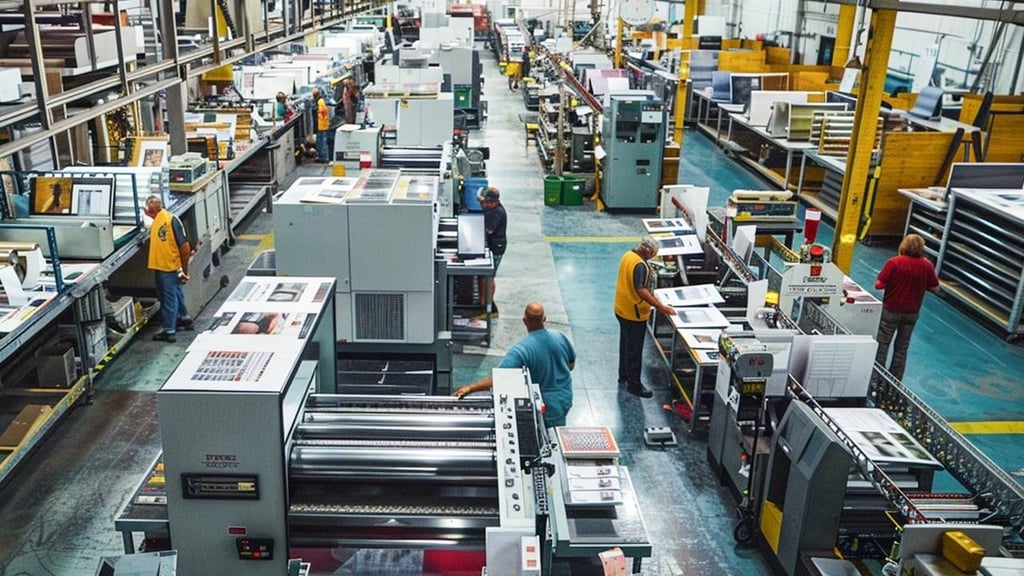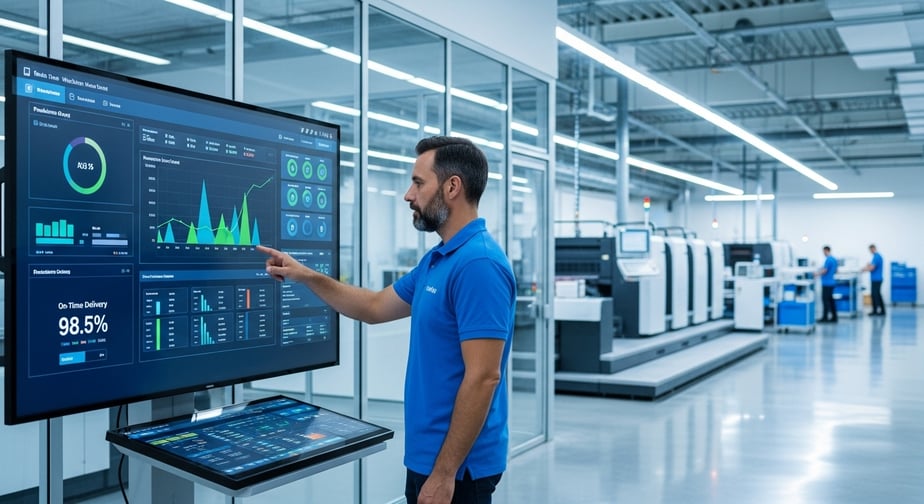
In 2026, the most competitive print partners are not those with the newest presses, but those with the most intelligent and integrated workflow. This isn't just a bold prediction; it's the emerging reality of a market redefined by on-demand expectations and supply chain volatility. According to a 2024 McKinsey report, over 90% of enterprises are actively localizing their supply chains to build resilience, a trend that directly fuels the need for agile, automated, and data-driven production. The era of succeeding with standalone equipment is over. Today, your ability to automate processes from order intake to shipping label generation is your primary competitive advantage. This guide will explore how modern print workflow software is no longer just a tool for incremental efficiency but the central nervous system for profitable, scalable, and resilient print operations. We will delve into the data, frameworks, and technologies that separate market leaders from the rest.
Main takeaways
For operations leaders and production partners navigating the complexities of 2026, here are the essential insights on mastering your production environment:
-
Automation is non-negotiable: The projected decline in the printing workforce, as noted by the U.S. Bureau of Labor Statistics, makes automation essential for maintaining productivity. Modern print workflow software automates everything from file preflighting to job routing, enabling leaner teams to achieve more.
-
Data is the new ink: The ability to integrate your MIS, ERP, and production floor data into a single platform provides unprecedented visibility. This centralized data is crucial for optimizing schedules, managing SLAs, and making informed business decisions.
-
KPIs are a direct outcome of workflow: Top-quartile key performance indicators (KPIs) like 98% on-time delivery and sub-3% scrap rates are not achieved by chance. They are the direct result of a highly optimized and automated workflow that minimizes errors and maximizes throughput.
-
AI is reshaping production: Artificial intelligence is no longer a future concept. AI-driven tools for cost estimation, predictive maintenance, and intelligent job batching are delivering tangible returns by increasing accuracy and efficiency. Explore how you can be automating decisions with AI and machine learning in your facility.
-
Integration creates resilience: A workflow built on API-first principles allows for seamless connection to platforms like GelatoConnect, logistics partners, and material suppliers. This connectivity is the foundation of a resilient operation that can adapt to market shifts and customer demands in real time.
 The 2026 landscape: Why your workflow is your primary competitive advantage
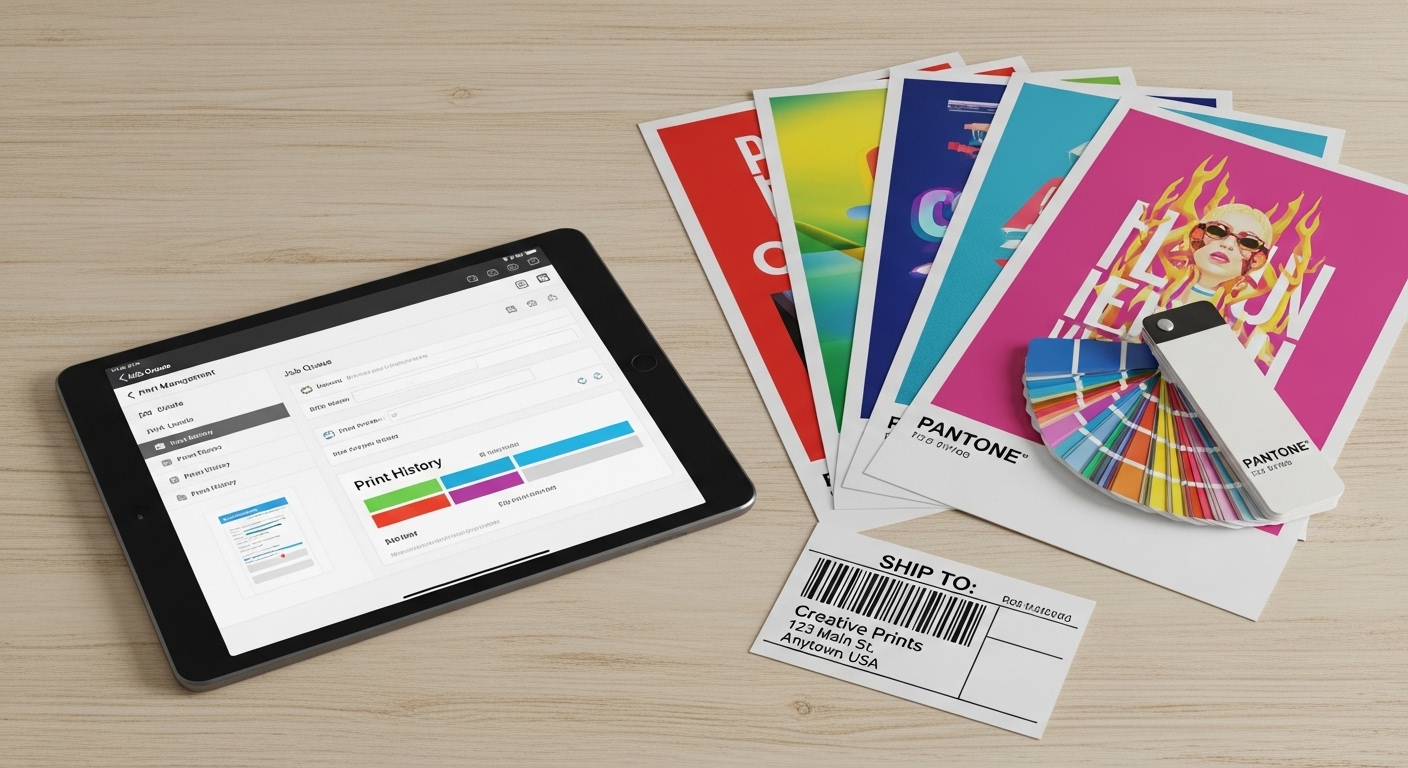
The print industry is at a critical inflection point. The global print management and workflow software market, valued at USD 1.3 billion in 2024, is set to grow at a blistering CAGR of over 11.5% through 2030. This growth isn't just about replacing legacy systems; it's a fundamental response to three powerful market forces that define the operational challenges of 2026.
First, the demand for localized, on-demand production has permanently altered order patterns. Large, predictable print runs are being replaced by a high volume of small, customized orders with tight deadlines. This shift puts immense pressure on manual processes, making a streamlined order intake process a prerequisite for success. Without automation, the administrative overhead of managing thousands of unique jobs can quickly erode profitability.
Second, persistent supply chain volatility, reflected in fluctuating prices for pulp and paper, requires unprecedented agility. The days of static pricing and inventory management are gone. According to the U.S. Bureau of Labor Statistics, material costs remain a significant variable. Modern print workflow software allows partners to track inventory costs in real time, adjust pricing dynamically, and optimize material usage, turning a potential liability into a competitive edge.
Finally, the talent landscape is contracting. With a declining workforce, print businesses must amplify the productivity of every team member. Automation is the only viable path forward. By handling repetitive tasks like file checking, job ticketing, and status updating, workflow software frees up skilled operators to focus on value-added activities that require human expertise, such as quality control and complex finishing. This is why investing in a comprehensive print management software solution like GelatoConnect is no longer an IT project but a core business strategy.
Deconstructing the ideal print workflow: From intake to dispatch
An optimized workflow is a seamless, automated journey that transforms a digital order file into a shipped physical product with minimal human intervention. This "lights-out" process is built on five critical stages, each powered by intelligent software.
1. Automated intake and validation
The workflow begins the moment an order is placed. Best-in-class systems use API-first architecture to ingest orders directly from platforms like GelatoConnect, eliminating manual data entry entirely. The goal is to have over 99% of orders flow into your system without a single keystroke, creating an instant, error-free job ticket that includes all necessary production specifications, artwork, and shipping details.
2. Intelligent preflight and routing
Once an order is in the system, it enters the prepress stage, a notorious bottleneck for many print shops. Modern print workflow software automates this crucial step. The system automatically preflights files, checking for common issues like low resolution, incorrect color spaces (RGB vs. CMYK), missing fonts, and improper bleed settings. With an automated preflight pass rate exceeding 95%, files are made press-ready in under 10 minutes. The software then uses rule-based logic to route the job to the most appropriate press based on substrate, run length, finishing requirements, and real-time machine availability. This is where tools like AI-powered cost and time estimation can further refine routing decisions for maximum efficiency.
3. Dynamic production and real-time monitoring
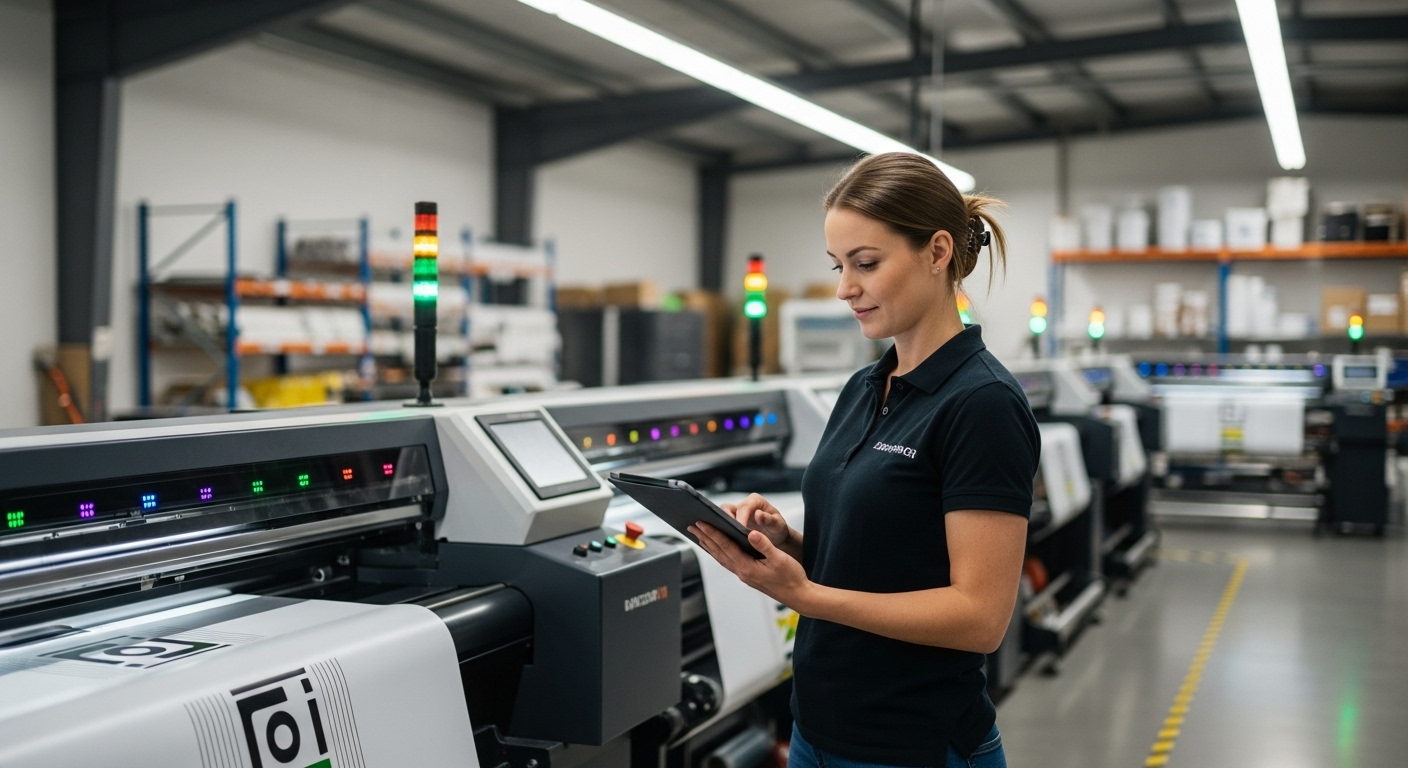
On the shop floor, the software acts as the production conductor. It intelligently batches similar jobs together—grouping orders by paper type, size, or finishing—to minimize changeover times and material waste. For digital presses, this can reduce average job changeover to under 5 minutes. Production managers can monitor the status of every job on a central dashboard, often accessible via tablets on the shop floor, providing real-time visibility and ensuring machine utilization stays above the 80% benchmark.
4. Integrated quality assurance (QA)
Quality control is embedded directly into the digital workflow. Instead of relying solely on manual post-production checks, the system builds in digital QA checkpoints. For example, after printing, an operator might scan a barcode on the job ticket, prompting a checklist on their tablet to confirm color accuracy against a standard or verify trim marks are correct. This creates a digital audit trail for every order, ensuring 100% QA sign-off and helping to drive rework rates below the industry-leading 2% benchmark.
5. Automated dispatch and tracking
The final step is getting the product out the door. A fully integrated workflow automates this entirely. Once the QA step is complete, the system triggers the final actions: it communicates with a shipping platform like ShipEngine via API to generate the correct shipping label, automatically books the pickup with the carrier, and sends the tracking information back to GelatoConnect. This ensures the time from production completion to dispatch is consistently under one hour, meeting the tight SLAs customers demand. This entire process represents the pinnacle of end-to-end print workflow management.
 Key performance indicators transformed by workflow automation
Implementing sophisticated print workflow software isn't about the technology itself; it's about the measurable impact on your business. Let’s examine how automation directly transforms the most critical production KPIs, using 2024 industry benchmarks as a baseline.
-
On-time delivery (OTD): While the industry average OTD hovered around 94% in 2024, top-quartile providers consistently hit 98% or higher. This 4% difference is the margin between a reliable partner and a world-class one. Workflow software achieves this through centralized SLA monitoring dashboards that automatically flag at-risk jobs, allowing managers to intervene proactively before a deadline is missed.
-
Scrap / rework rate: Inefficient operations can see scrap rates exceed 8%, a direct drain on profitability. As reported by the PRINTING United Alliance, operations using automated preflighting and color management reduced these rates to between 1-3% in 2024. Automation catches file errors before they hit the press and ensures color consistency, virtually eliminating the two most common causes of waste. For more on this, see our complete guide to print workflow automation.
-
Capacity utilization: Average press utilization often languishes between 65-75%. Leading firms, however, pushed this figure above 85% in 2024 by using advanced scheduling modules within their workflow software. By minimizing downtime and intelligently batching jobs, the software ensures your most expensive assets are always generating revenue.
-
Overall equipment effectiveness (OEE): OEE is the gold standard for measuring manufacturing productivity, combining availability, performance, and quality. Print workflow software provides the data needed to calculate and improve OEE. It tracks machine uptime (availability), measures actual output against potential output (performance), and logs defects (quality), giving you a holistic view of your operational health.
Advanced strategies: Applying operational frameworks through software
To truly lead the market, it's not enough to simply install software. The best operators use their workflow tools to implement proven operational excellence frameworks.
One such framework is the theory of constraints (TOC). TOC focuses on identifying and eliminating the primary bottleneck in any process. In a print shop, this might be a specific finishing machine or the prepress department. A modern workflow system allows you to apply TOC principles digitally. For instance, you can configure your scheduling algorithm to build a buffer of pre-flighted, ready-to-print jobs directly in front of your bottleneck press. This ensures your constraint is never starved for work, maximizing the throughput of the entire system.
Another powerful framework is statistical process control (SPC). This involves using data to monitor and control a process to ensure it operates at its full potential. By integrating your workflow software with quality management tools, you can use SPC to track critical variables like color accuracy (Delta E values) or cutting precision. Control charts can be displayed on operator dashboards, providing instant alerts if a process deviates from the acceptable range, allowing for corrections before an entire run is wasted. Implementing these advanced methods is one of the most effective tips for maximum print efficiency.
Conclusion: Build your future-proof operation today
The forces shaping the 2026 print market—on-demand production, supply chain pressures, and labor shortages—are not temporary trends; they are the new reality. Thriving in this environment requires more than just efficient equipment; it demands an intelligent, agile, and automated operational core. Modern print workflow software provides this core, transforming disconnected processes into a powerful, data-driven system that delivers speed, quality, and profitability.
By embracing automation, leveraging data, and focusing on continuous improvement, you can build a resilient operation that not only meets the demands of today but is also prepared for the opportunities of tomorrow. The data is clear: the future of print production is intelligent, connected, and automated.
Ready to transform your operations into a data-driven powerhouse? Explore GelatoConnect's comprehensive print management software to see how we can build the future of production, together.
Frequently asked questions (FAQ) about print workflow software
1. What is the single biggest benefit of implementing print workflow software?
The primary benefit is transforming your operation from a series of disconnected steps into a single, cohesive, and data-driven system. This integration is what drives improvements across all key metrics—speed, cost, and quality—by eliminating manual touchpoints, reducing errors, and providing complete visibility into your production floor.
2. How does print workflow software improve on-time delivery rates?
It improves OTD by automating scheduling, providing real-time job tracking, and proactively flagging orders at risk of delay. By having a central dashboard that monitors every job against its SLA, production managers can identify and resolve potential issues long before they impact a customer's deadline.
3. Can this software integrate with my existing ERP or MIS system?
Absolutely. Modern print workflow software is built with an API-first approach, designed specifically to integrate with other business-critical systems. Whether it’s connecting to an ERP like Microsoft Dynamics 365 for financial data or a CRM for customer information, a strong API ensures a seamless flow of data across your entire organization.
4. What is automated preflighting and why is it so important?
Automated preflighting is the process where software automatically inspects incoming artwork files for print readiness without human intervention. It checks for dozens of potential issues like resolution, color profiles, fonts, and bleeds. It's critical because it eliminates the manual prepress bottleneck, drastically reduces file-related errors, and accelerates the time it takes to get a job on a press.
5. How is artificial intelligence (AI) being used in modern print workflows?
AI is being integrated to handle complex, decision-based tasks. This includes AI-powered cost and time estimation, which can analyze a file and accurately predict ink usage and production time. AI is also used for intelligent job batching, predictive maintenance alerts for equipment, and even analyzing quality control images to spot defects.
6. What is the first step my company should take to implement a new workflow system?
The first step is to thoroughly map your current production process. Identify every touchpoint, from order receipt to shipping. This audit will reveal your primary bottlenecks, data silos, and areas of inefficiency, providing a clear roadmap for where automation will deliver the greatest impact. This analysis is fundamental to choosing the right end-to-end print workflow management solution.
2026 update: For the latest evaluation framework, see our 2026 print workflow software buyer's guide.
See it in action
Connect quoting, production and logistics in one flow.
Book a demoSee the AI Estimator