


Podcaster kiếm bao nhiêu & merch nhân đôi thu nhập (2026)

You have a great idea, a quality microphone, and a growing community of listeners. But one question is likely on your mind: is this a hobby or a potential career? Understanding how much podcasters make can feel confusing, with income reports ranging from a few dollars to millions.
This guide breaks down the real numbers behind podcast monetization in 2026. We will explore the traditional income streams and then reveal the most overlooked strategy for creators: using print-on-demand merchandise to build a powerful new revenue source.
Quick takeaways
Podcast income depends on audience size and multiple revenue streams.
Common monetization methods include ads, sponsorships, affiliate marketing, and subscriptions.
Merchandise is a low-risk, high-reward way to deepen community connection and significantly boost your income.
Breaking down podcast revenue streams
Your podcast’s earning potential is directly tied to how you monetize your audience. Relying on a single source of income is risky. The most successful creators build a diverse portfolio of revenue streams that work together. Let’s look at the most common methods.
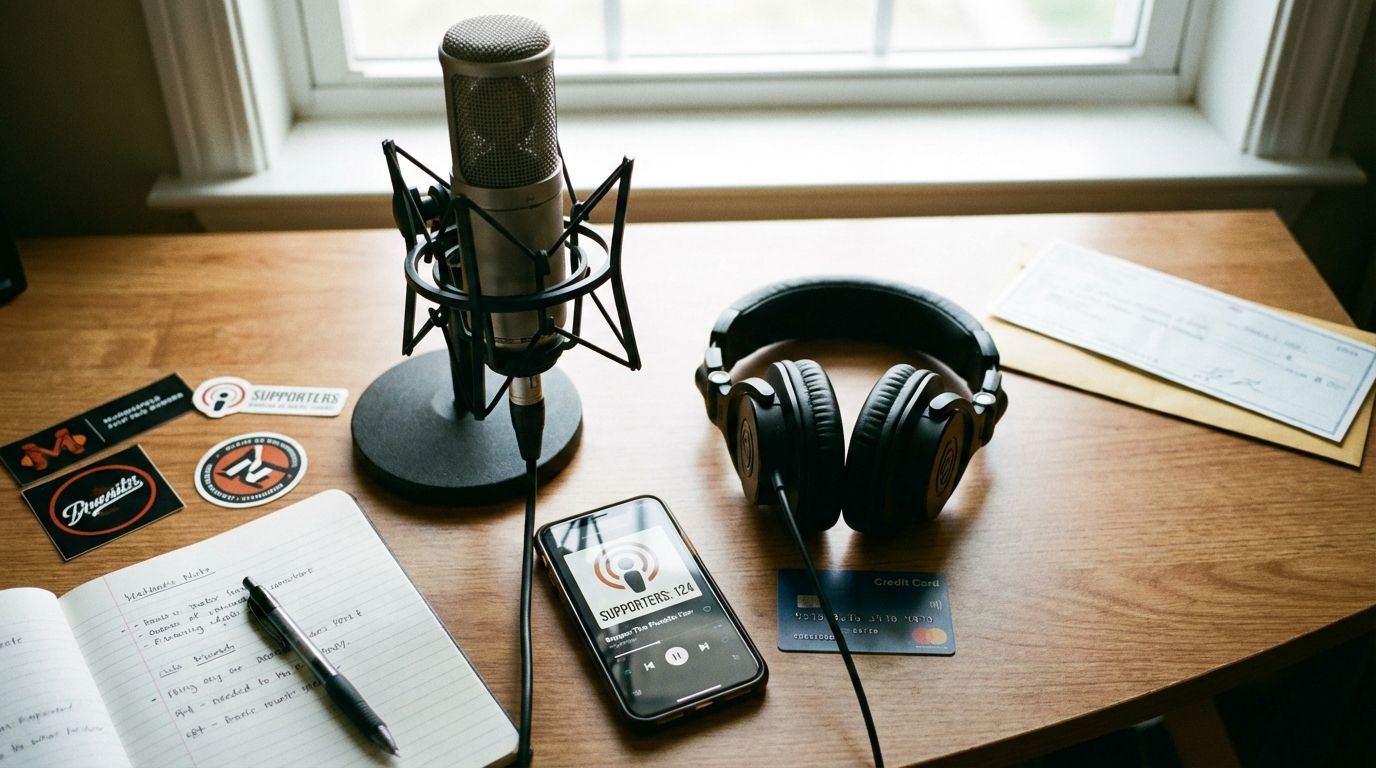
Advertising and sponsorships
This is the most well-known way podcasters make money. Advertisers pay to have their products or services mentioned on your show. The most common model is CPM, which stands for "Cost Per Mille" or cost per 1,000 downloads.
CPM rates can vary widely based on your niche, audience demographics, and ad placement (pre-roll, mid-roll, or post-roll). In 2026, typical CPM rates range from $18 to $50 for every 1,000 downloads.
Here’s a simple breakdown:
5,000 downloads per episode at a $25 CPM: 5 x $25 = $125 per episode
50,000 downloads per episode at a $25 CPM: 50 x $25 = $1,250 per episode
While these numbers are attractive, securing sponsorships often requires a significant audience and a dedicated sales effort.
Affiliate marketing
Affiliate marketing allows you to earn a commission by promoting another company’s products. When a listener makes a purchase using your unique link or promo code, you get a percentage of the sale. This is an excellent starting point for new podcasters because you don't need a massive audience to begin.
If your podcast reviews tech gadgets, you can become an affiliate for those brands. If you discuss books, you can link to them on Amazon. The key is to promote products you genuinely use and believe in to maintain your audience's trust. For those new to this model, it’s worth exploring affiliate marketing for beginners to get started on the right foot.
Premium content and subscriptions
Your most dedicated fans are often willing to pay for more content. Platforms like Patreon, Memberful, or Apple Podcasts Subscriptions make it easy to create a membership program.
You can offer exclusive benefits like:
Ad-free episodes
Bonus content or Q&A sessions
Early access to new episodes
Behind-the-scenes videos
Even with a small group of paying subscribers, this can create a stable, recurring monthly income.
So, how much do podcasters make? A realistic look
Now for the big question: what do these streams add up to? The truth is, how much do podcasters make varies dramatically. Income is a spectrum, not a single number. Here’s a realistic look at earnings based on audience size.

The beginner podcaster (under 1,000 downloads per episode)
At this stage, your focus should be on creating great content and growing your audience. Monetization is minimal, likely between $0 and $100 per month, primarily from small affiliate commissions or direct donations.
The growing podcaster (1,000 - 10,000 downloads per episode)
Once you cross 1,000 downloads per episode, doors to monetization start to open. You can attract smaller sponsors and see more consistent affiliate income. Earnings can range from $100 to $2,000 per month. This is the point where your podcast can become a serious side hustle.
The established podcaster (10,000 - 50,000 downloads per episode)
With this audience size, you are a professional creator. You can command higher CPM rates and work with larger brands. A combination of sponsorships, affiliate deals, and premium subscriptions can generate $2,000 to $10,000+ per month, turning your podcast into a full-time job.
The top-tier podcaster (50,000+ downloads per episode)
These are the podcasts you hear about in the news. They are full-fledged media businesses with six-figure annual incomes and beyond. They have multiple, highly optimized revenue streams and often have a team supporting their work.

The missing piece: How merch can double your income
Looking at the numbers, it’s clear that growing an audience big enough for substantial ad revenue takes time. But there's another income stream that doesn't depend on having tens of thousands of listeners. That stream is merchandise.
Selling merch does more than just make you money. It:
Deepens your community: A t-shirt with an inside joke makes a listener feel like part of a club.
Acts as free marketing: Your fans become walking billboards for your show.
Creates a direct revenue stream: You aren't reliant on ad networks or brand deals.
Many creators hesitate because they think it's too complicated, expensive, or time-consuming. But with print on demand, those barriers are gone. Print on demand is a fulfillment model where products are only printed and shipped after an order is placed. There’s no upfront cost, no inventory to manage, and no risk.
Launching your first merch line is easier than you think
You don’t need a business degree or a complex strategy to get started. You can launch your first merch line this weekend with three simple steps.
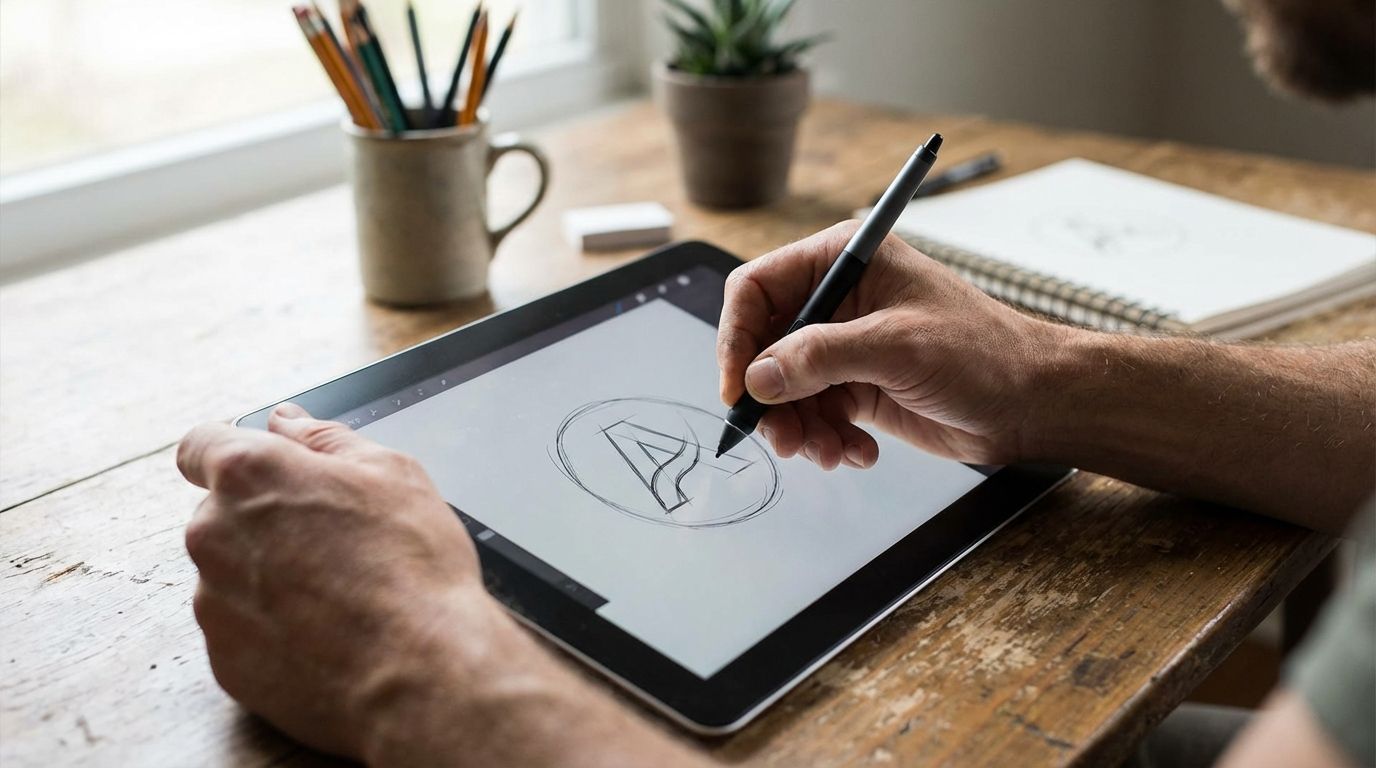
Step 1: Start with a simple design
Your first design doesn't need to be a masterpiece. The most effective merch often comes from a shared experience with your audience. Think about:
A memorable catchphrase from your show
An inside joke your community loves
A simple, clean version of your podcast logo
You can use free tools like Canva to create a design in minutes. Often, text-based designs are the most powerful. If you have a popular quote, that's all you need. Our guide to selling t-shirts with quotes has plenty of inspiration.
Step 2: Choose two high-impact products
Don't overwhelm yourself or your audience with dozens of options. Start small with a couple of proven sellers. We recommend starting with a classic t-shirt and a custom mug.
These two items are some of the most profitable print-on-demand products and appeal to a wide audience. They are easy to design for and serve as a perfect test to see what your listeners respond to.

Step 3: Connect your store and start selling with Gelato
With your design and products chosen, the final step is setting up your shop. Gelato seamlessly integrates with major ecommerce platforms like Shopify, Etsy, and WooCommerce. The entire process of setting up a print on demand business can take less than an afternoon.
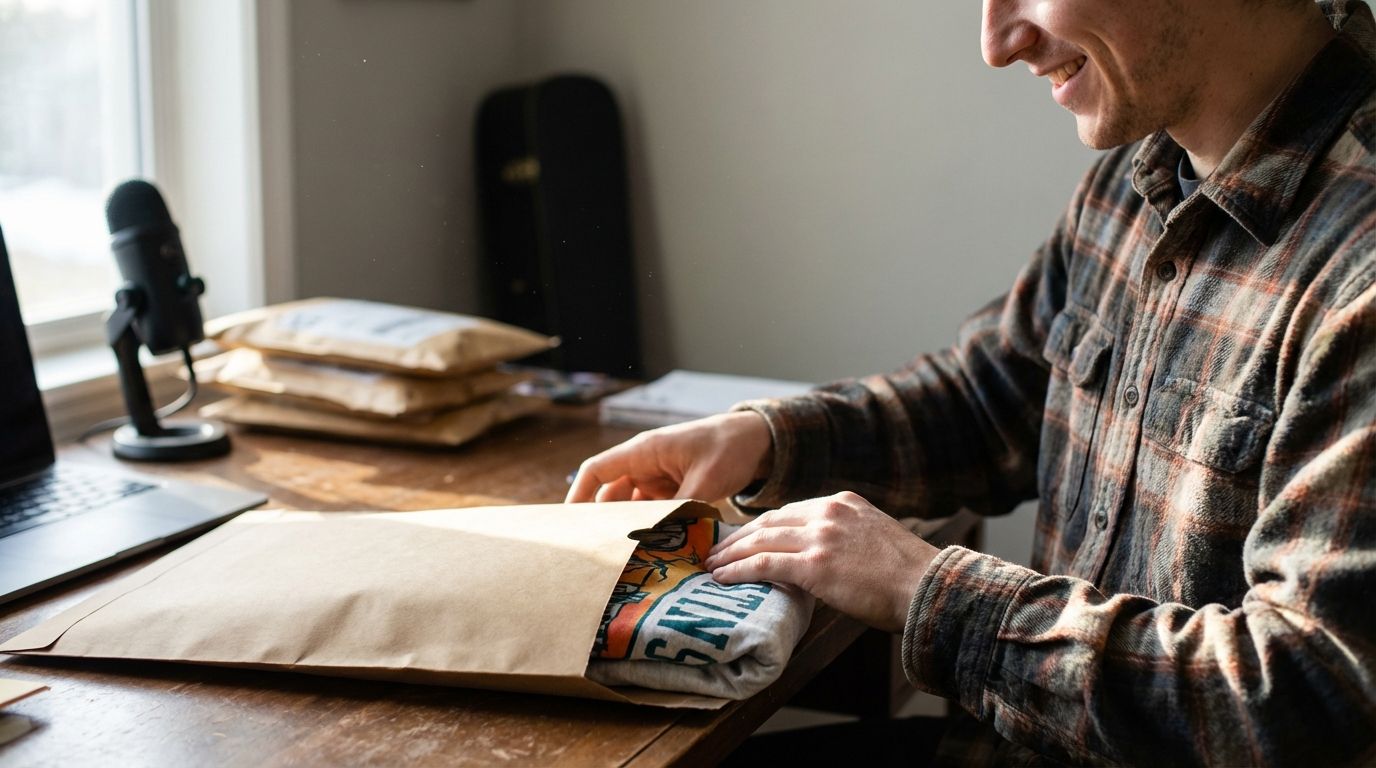
Once connected, you simply upload your design to the products you chose, set your price, and publish them to your store. When a fan places an order, Gelato handles everything – the printing, packaging, and shipping directly to your customer. You just focus on creating your podcast.
A quick look at the profit potential
Still wondering if merch is worth it? Let’s run a quick scenario.
Imagine your podcast has a dedicated audience of 5,000 listeners per episode. If just 2% of them (a very conservative estimate) decide to support your show by buying a t-shirt, that’s 100 sales.
Selling price of your t-shirt: $30
Gelato base cost: ~$15
Your profit per shirt: $15
With 100 sales, that’s $1,500 in pure profit from a single merch drop. For a podcaster in the "growing" stage, that could instantly double or even triple their monthly income. This is why asking "is on demand printing profitable?" is so important—the data clearly shows it is.
Your podcast is more than just downloads
So, how much do podcasters make? The answer is that they make as much as their creativity and strategy allow. While ad revenue is a great long-term goal, it’s not the only path to a sustainable income.
By building a direct connection with your audience through merchandise, you create a revenue stream that you control. You're not just selling a product; you're offering your listeners a way to be a bigger part of the world you've created.
You don’t need a million downloads to start earning a real income from your passion. You just need a great community and the right tools. Create merch for your fans today and turn your listeners into your most passionate supporters.