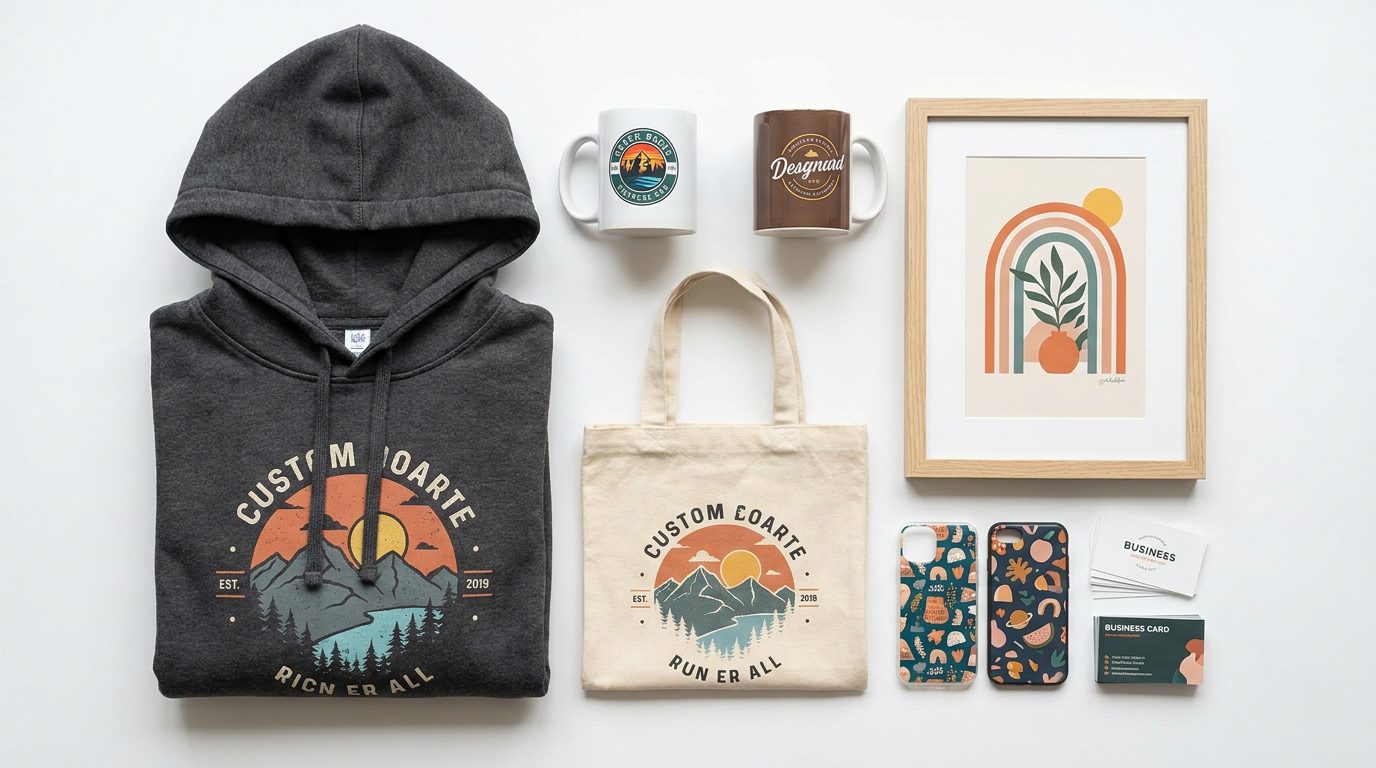

The default advice for entering any new market is: research the culture, adapt your designs, run some ads. That is correct as far as it goes. But it skips the operational layer — the specific differences that affect whether a UAE buyer adds to cart before they have even fully read your listing.
This is not a market overview. If you want numbers: the UAE fashion e-commerce market is growing at around 12% annually, it has one of the highest per-capita online spend rates in the world, and it has a fraction of the POD competition of equivalent Western markets. That is the case for being here — and with Gelato's UAE print-on-demand fulfilment, your existing store can serve Gulf buyers automatically. What follows is what you actually need to change.
- Your heavyweight bestsellers may not suit the UAE climate — lightweight and layerable converts better than you'd expect.
- Standard POD mockup photography (grey, overcast, cool-toned) looks flat on UAE social feeds. Warm, bright, saturated imagery outperforms.
- Listing 'oversized fit' is not a sizing description. UAE buyers need garment measurements — and missing this loses sales silently.
- Opacity matters. Thin t-shirts are a barrier to purchase for a significant proportion of UAE buyers; specifying fabric weight resolves this.
- UAE gifting is group-coordinated via WhatsApp. Matching sets and bundle-friendly listings have a viral loop that doesn't exist in Western markets.
- The corporate Ramadan gifting channel is almost entirely untapped by Western POD sellers and worth more per order than a month of individual sales.
1. Your heavyweight hoodie is the wrong product
If your UK or US store runs on 380gsm fleece hoodies, you have built your bestseller list around a product that is genuinely unwearable outdoors in the UAE for the better part of nine months. June temperatures in Dubai average 38°C; it does not drop below 25°C at night until December.
The non-obvious part is what this actually means for product selection. The demand for a layering piece does not disappear — it shifts. UAE offices and shopping malls are aggressively air-conditioned, often to the point where people carry a layer specifically for indoor use. A 260gsm midlayer, a lightweight quarter-zip, or a 200gsm custom t-shirt fills this gap in a way that a 400gsm winter hoodie cannot. The sellers doing well in the Gulf are not listing fewer products — they are listing the same range, built around different fabric weights.
The two to three months of genuinely cooler weather (December to February) are worth targeting with heavier pieces. But treat this as a seasonal window, not your year-round anchor.
2. Your mockup photography is working against you
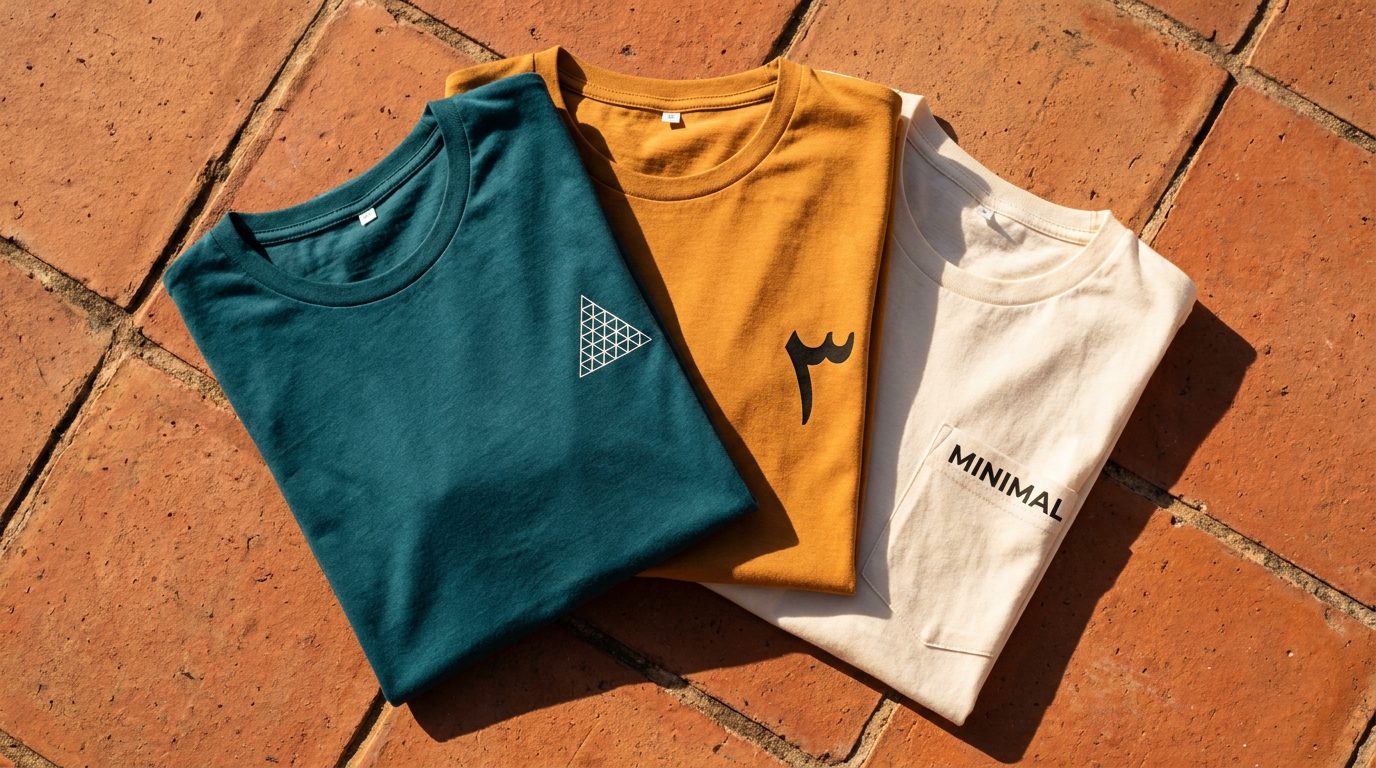
Almost every default POD mockup template was photographed in grey, overcast, Northern European light. On a UK or US Instagram feed, that flat-lit, cool-toned image fits right in. On a UAE feed — where user-generated content is shot in sharp, direct, 40°C sunshine — your mockup looks washed out and low-quality by comparison, even if the product is not.
The fix is more in your control than you might think. Gelato's Magic Mockups generates lifestyle photography from a prompt — which means you are not choosing from a library of pre-shot templates, you are directing the shot. Prompt specifically for the conditions that match where your buyer is: direct sunlight, warm stone surface, bright outdoor setting. You get an image that looks like it was taken in the same visual environment your UAE buyer is already scrolling through, not the grey studio that was convenient for a photographer in Rotterdam.
The same principle applies to your colour palette. Muted sage greens, greige, and dusty pink — the palette that dominates Scandinavian-influenced Western POD — photograph well in diffused grey light and look quiet and tasteful on a UK feed. In UAE sunlight, they look desaturated and flat. Warm terracottas, deep teals, rich ochres, and off-whites with yellow warmth hold their saturation in direct light and align with the visual aesthetic that UAE buyers are already scrolling through.
3. 'Oversized fit' is not a sizing description
The UAE has one of the most genuinely diverse body-type demographics in the world. South Asian, Arab, African, Southeast Asian, and European buyers are all in the same market, with meaningfully different sizing expectations. Listing 'oversized fit — runs large' communicates nothing useful to a buyer who has been burned before by inconsistent international sizing.
What converts better: actual garment measurements in your listing description. Chest width in centimetres at the listed sizes, garment length, sleeve length. This is standard practice on larger fashion platforms; most Etsy and Shopify POD sellers do not do it. In a market where the buyer cannot physically handle the product before purchase, and where sizing conventions vary significantly by country of origin, a size chart with real measurements removes a real barrier. It also reduces the return rate, which matters for your seller metrics.
4. The opacity issue most sellers never consider
Standard 160gsm cotton tees become subtly see-through in direct sunlight. In overcast Northern European conditions this is rarely noticeable. In the UAE, worn outdoors, it is. For a significant proportion of your potential UAE buyers — those who wear modest dress as a preference or a practice — a fabric that photographs as slightly translucent is simply not purchasable, even if they like the design.
The fix is simple and costs nothing: specify fabric weight in your listing description, and where your blank is 200gsm or above, note it explicitly. '200gsm — fully opaque' is a three-word addition to your custom t-shirt product description that removes a hesitation point for a large segment of your audience. Almost none of your competitors are doing this.
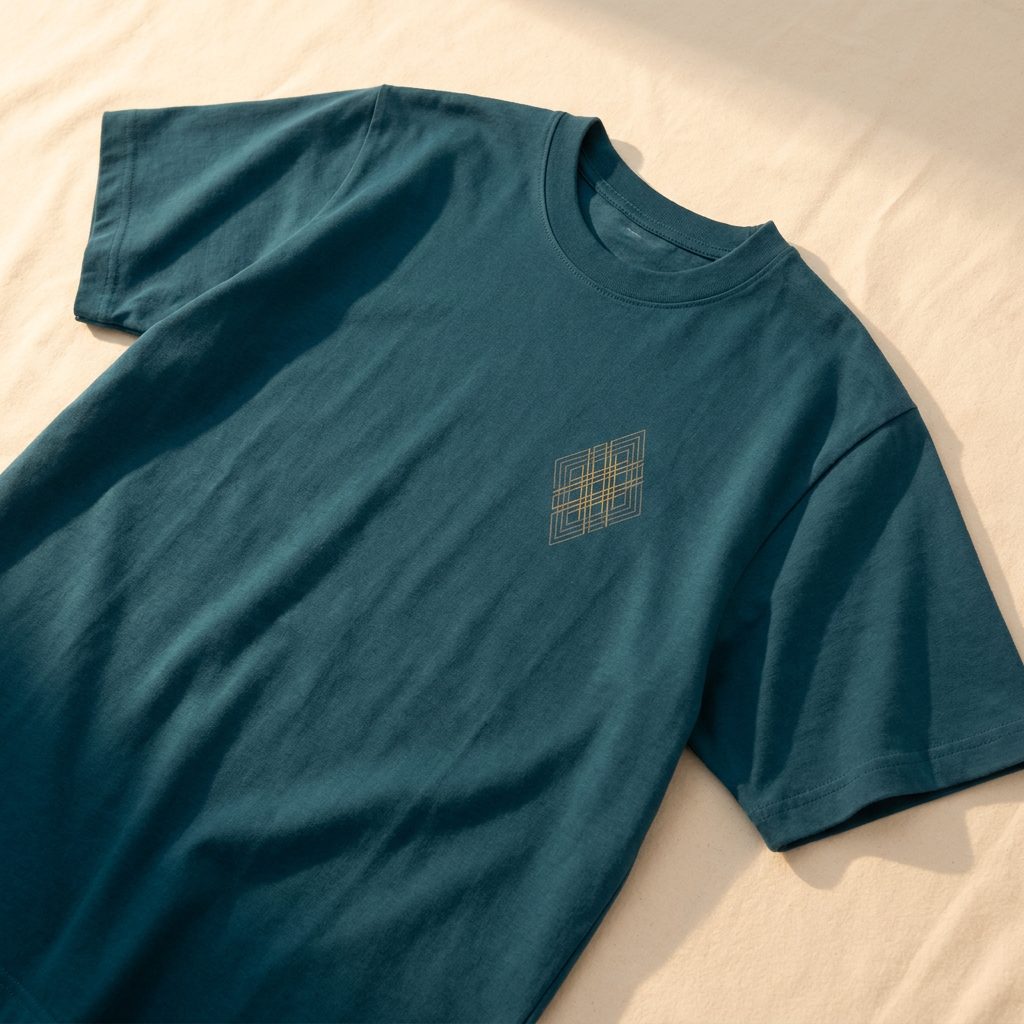
Premium custom t-shirts, fulfilled worldwide
Gelato's custom t-shirts are available in a range of fabric weights and fits — including options suited to the UAE climate. No minimum order, no stock risk, automatic fulfilment to buyers across the Gulf.
Shop now →5. UAE gifting has a different shape
Western gifting is largely individual: one person buys a product for one other person. UAE gifting — particularly around Eid — is more communal and coordinated. Family WhatsApp groups share product links and buy together. Parents buy matching pieces for children. Employers buy the same item for an entire team. The purchase decision is often made by one person on behalf of a group of people who will receive or wear the same product.
This changes how you should structure your listings. Products that are clearly buyable in multiples — matching parent-and-child sets, coordinated family designs, same-print-different-colour bundles — have a viral loop in the UAE that they simply do not have in Western markets. A buyer who shares your listing to a WhatsApp group of twelve people is generating a referral mechanism that no ad spend replicates. Build your listings with that buyer in mind: include photos of the product worn together, note that it is available in multiple sizes within the same design, and make the bundle path obvious.
The two key dates are Eid al-Fitr (end of Ramadan — late March 2026) and UAE National Day (December 2). Give yourself six to eight weeks of lead time before each. Not to design to those specific occasions — to have your existing catalogue visible and converting when intent spikes. Gelato fulfils to UAE addresses automatically from your connected store, so there is no extra setup when orders spike.
6. Quality signals outperform price competition
UAE online buyers are not particularly price-sensitive at the £30–60 tier. They are acutely sensitive to quality signals. A product that looks cheap — unclear photography, thin-sounding fabric description, low-resolution design rendering, a generic store layout — will lose a sale to a competitor charging twice the price who presents better.
This changes your decision calculus on blank selection. The standard-weight, budget-range blank that works fine for a £22 UK sale is the wrong choice for a market where buyers will pay £45 if the product looks worth it. Upgrade your blank to the premium tier — heavier cotton, better construction, more considered colourways — and price accordingly. This applies whether you are selling custom t-shirts or hoodies: the margin is better and the conversion rate in this market tends to be higher on premium-positioned products, not lower.
7. The corporate gifting channel nobody is using
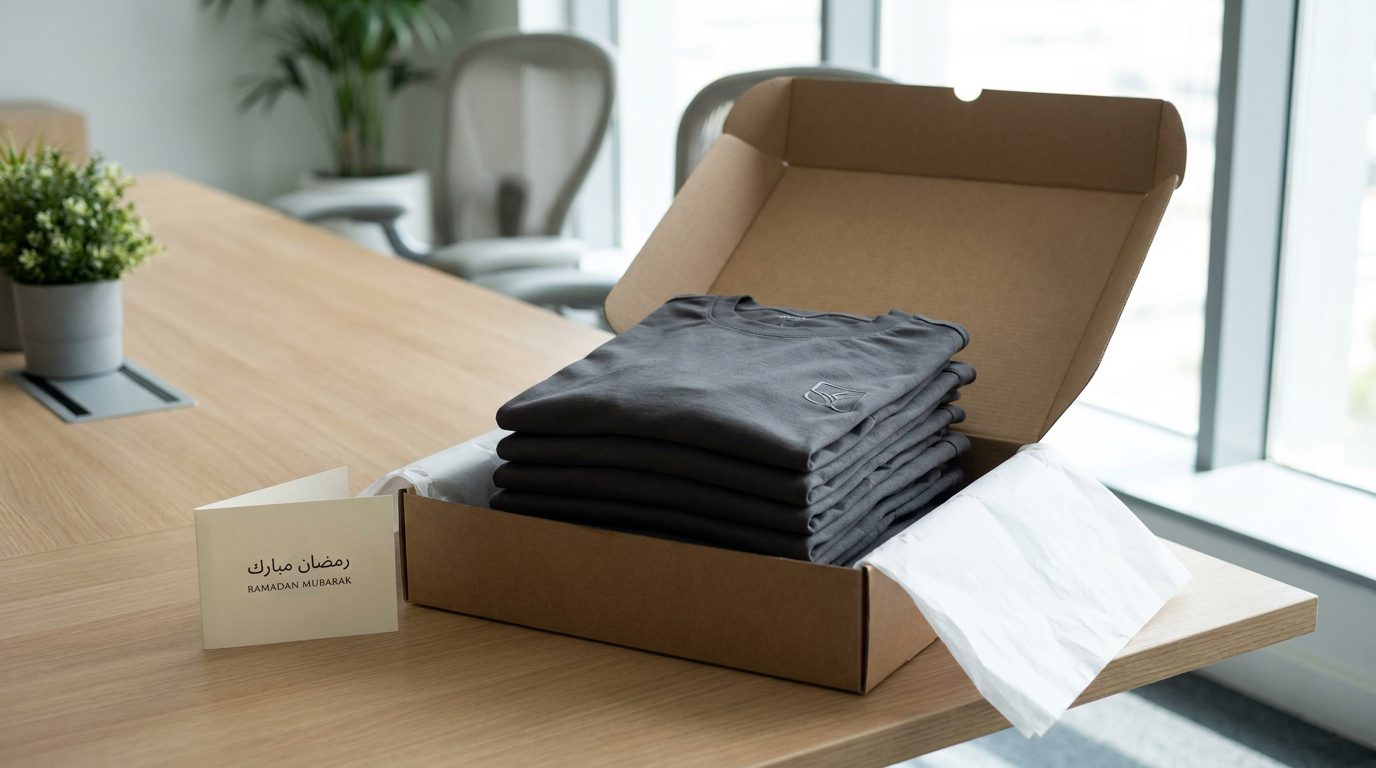
The UAE has an unusually high density of multinational company offices. Corporate gifting — particularly during Ramadan — is a genuine business practice: companies give gifts to employees and clients as a matter of course in the weeks before Eid. Custom branded products are a natural fit.
This is not a channel you access through Etsy search. It is a channel you access through direct outreach: LinkedIn messages to office managers, executive assistants, and HR managers at Dubai-based companies, offering a no-minimum, no-lead-time custom product service. One corporate client ordering 50 branded tees for Ramadan is worth more gross margin than most individual sellers see in a month. Print on demand through Gelato is the enabling technology — you can fulfil an order of 50 without holding any stock, with each item produced and shipped individually. No warehouse, no upfront cost, no minimum.
The window to start building these relationships is now. Ramadan 2027 falls in late February. Corporate procurement decisions for seasonal gifts are typically made six to ten weeks in advance. Start outreach in December.
How to test all of this without committing to anything
Every change described in this post is low-risk to try. Swap a mockup image using Magic Mockups: five minutes and zero cost. Add garment measurements to a listing description: ten minutes. Upload a lighter-weight product variant and list it alongside your existing range: one afternoon and whatever Gelato charges for a single test order. Send twenty LinkedIn messages to Dubai office managers in December: two hours, no cost.
This is the specific advantage of print on demand in the UAE when you are entering a market for the first time. You do not validate the UAE market with a warehousing commitment or a minimum order. You validate it with a listing change and a small ads test. Connect your Etsy or Shopify store and your UAE listings are live in minutes. Everything above can be testing within a week. That is not a caveat — it is the whole point.
Start selling to UAE buyers with Gelato
No inventory, no minimum order, automatic fulfilment across the Gulf. Connect your Etsy or Shopify store and your UAE listings are live in minutes.